Making Data Management Easier with Automation
Making Data Management Easier with Automation
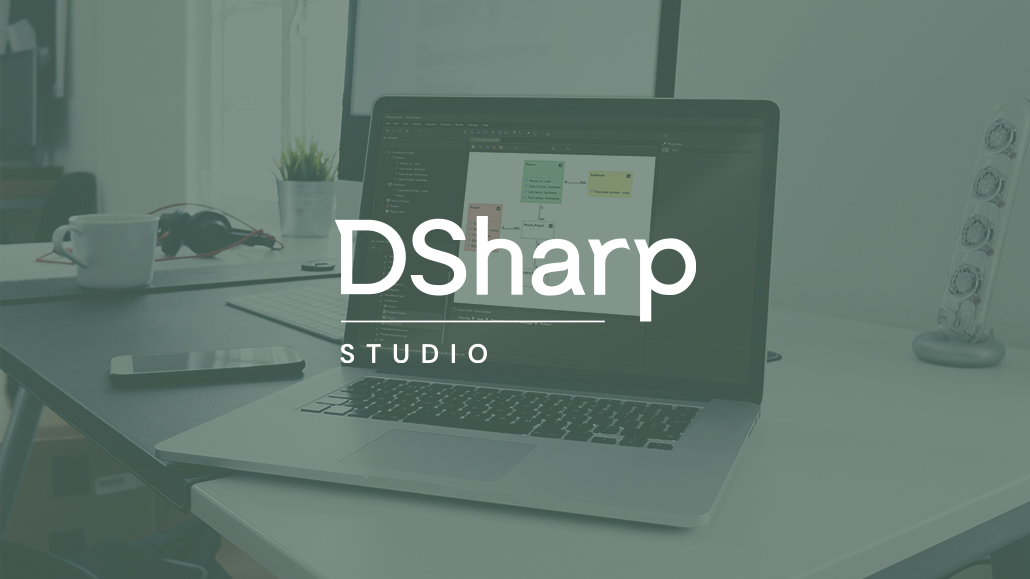
DSharp’s automation tool, DSharp Studio, assists organizations in collecting and integrating scattered data. The result is a fully automated data warehouse solution with limitless possibilities for further utilization and expansion.
DSharp provides the top-performing solution for managing distributed organizational data, enabling versatile data exploration and utilization. It is based on conceptual modeling and automates the entire data warehouse construction process from start to finish.
Comprehensive reporting solutions are always technically complex. Among various construction methods, Data Vault, realistically involving thousands of tables, is often perceived as laborious and expensive, simply because traditionally implemented, it is. However, the requirement specifications for reporting solutions often list as mandatory exactly those aspects that Data Vault addresses. This makes Data Vault a reasonable and functional solution model instead of inventing a completely new implementation approach.
DSharp Studio Removes Implementation Barriers
In a data warehouse project, there are many similarities to a house construction project. A house doesn’t get built without detailed electrical and plumbing plans, which can only be made once the floor plan is ready, and the structures, materials, and placements are known. These, in turn, are based on the intended use of the house, which can be sketched and clarified with visualizations: what does the living room look like when finished, and does the kitchen need a gas stove in the middle of the island?
Everything starts with needs. However, there’s a long way from sketches to moving day. Construction begins only when plans are in place, and each phase requires different expertise. It’s no wonder that the first step towards acquiring a Data Vault solution often hits a threshold.
DSharp Studio’s automation lowers that threshold to floor level. In DSharp Studio’s Design Mode, a conceptual model (cf. floor plan) is created based on visualizations (e.g., required reports and data sources), after which DSharp Studio’s Run Mode mobilizes its internal experts and produces all the necessary technical structures (cf. structural plans, electrical and plumbing). It even produces the final implementation based on these (all necessary database tables, views, and procedures, as well as the final SQL code). The moving day is thus the day the floor plan is created.
So, even though a Data Vault solution is always technically extensive, it no longer requires long-term, risky, and expensive projects because those extensive parts are not done manually. The threshold has been removed. Once the first house is ready, the next is built, and the village grows into a city.
Automation Encourages to Trust the Process
Benefits of conceptual model-based data warehouse automation, i.e., DSharp Studio:
- Concrete time savings: draw one class and let the system build even hundreds of tables for you, including data transfers. Imagine the time savings with a thousand classes.
- Consistency: the algorithm always works the same way; once the model is ready, the solution works, and data flows. The resulting structure is consistent, predictable, and understandable.
- Ease of development: The tool supports and guides the work; real-time class analysis serves as a to-do list for modeling tasks.
- Clarity and ease of use of the data warehouse solution: Data is published to users in the form of the conceptual model, not the resulting Data Vault.
- Efficiency of the entire process: supports fast-paced agile development, enabling up-to-date data-driven decision-making.
By Kim Johnsson, Product Owner, Coach, Developer Relations, DSharp Data Solutions