The City of Turku Expanded Its Data Warehouse with Library Data
The City of Turku Expanded Its Data Warehouse with Library Data
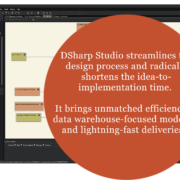
The City of Turku has been developing its own data warehouse solution for a long time, aiming to bring data from various sectors into effective use for data-driven management. One of the new components is reporting for library services. In the implementation, library data was integrated into the data warehouse, and a dedicated data cube was modeled from it. DSharp’s automation tool, DSharp Studio, made the data loading and modeling process seamless.
In recent years, Turku’s information services have invested heavily in making data as accessible and usable as possible across the city’s various functions. Having control over the data allows the city to manage operations more effectively, perform historical comparisons, and integrate data with other municipal information sources. A prime example of this development is the advancement of reporting for Turku’s library services.
This is not just about reporting – it represents a shift in mindset, where the City of Turku is building its own data-driven ecosystem, independent of external systems. At the same time, the solution has evolved into a resource that benefits the entire Vaski library network.
The expansion of the City of Turku‘s own data warehouse to include library reporting was initiated by the libraries in the region, who expressed a need for more detailed and customized reporting. Data collected in the national system was transferred to the city’s own data warehouse to enable more flexible usage. Teemu Peltonen, an information services specialist for the City of Turku, highlights that one of the key benefits of the in-house warehouse is the ability to combine data in new ways:
“We wanted to take control of our data so that we can modify it ourselves and decide what information we want to use and combine in reporting. In the future, the data stored in our own data warehouses can be integrated with other city datasets, such as financial data. This allows us to compile valuable insights to support decision-makers.”
Automating data and creating a dedicated data warehouse ensures access to up-to-date information at all times, enabling quick responses to change and more effective service development. When the data is under the city’s own control, it can be integrated with other datasets, such as financial or logistics data, offering a much broader and more accurate view of operations.
Preserving historical data also enables comparisons across different years, providing continuity for data-driven decision-making. Thanks to automation, reporting becomes more than just a technical process – it actively supports long-term and systematic planning and development of city services.
More Efficient Reporting from an In-House Data Warehouse
Turku’s library services are part of the Vaski library network, which includes 18 municipalities. The libraries use Koha, a national open-source library system that consolidates user and lending data. The aim of this project is not to replace the national system, but to complement it with a parallel reporting solution that enhances local operations.
In the future, combining library data with financial data could, for example, help determine the costs of specific activities. There are also plans to support the cultural board’s reporting needs using the consolidated data. For now, the data warehouse is used exclusively for internal reporting within library services, as the system’s potential is further explored.
A full license for DSharp Data Studio, an automation tool developed by DSharp, enabled efficient data modeling and automation for the library services. The tool accelerated data collection and reduced manual effort in handling the extensive datasets from the library system:
“Maintaining this kind of system would otherwise be very labor-intensive, but modeling significantly speeds up the creation of the entire data warehouse architecture. It also makes it possible to expand the system in the future if new source systems are added,” says Niko Punkkinen, a representative of the project’s IT provider, Loihde.
The development of Turku’s data warehouse project is moving forward on multiple fronts, encompassing both the data warehouse itself and the ongoing improvement of reporting, following a continuous service model. Loihde is responsible for building and maintaining the data pipeline, while Turku’s information services focus on developing and advancing the reporting side.
The city also acts as the central contact and gatekeeper, ensuring that data standards are upheld across different contexts of use. This includes overseeing interpretations based on the data and ensuring their accuracy.
Knowledge Is Power in Service Development
One of the key advantages of managing own data is continuity. With many purchased systems, there have been cases where historical data was at risk of being lost during a vendor transition. Now that the city has its own data warehouse and a well-defined data pipeline, data-driven management can continue year after year without interruption. This project lays the foundation for bringing library reporting under the city’s control:
“This way, we can extract exactly the insights we need from the data, and in the future, potentially bring in more source systems as resources allow. Historical data plays an important role here—there have been cases in the past where, after a system change, historical data ended up forgotten on some file server and was no longer used. Now, we have a structured place where data is systematically collected and remains accessible for years to come,” says Peltonen.
Automation of data has played a significant role in the development of library reporting in Turku. One of the biggest benefits has been the reduction of manual work: previously, compiling reports required a lot of hands-on effort, such as extracting data from the source system, calculating sums in Excel, and putting together presentations in PowerPoint. Now, all of this is done automatically—data flows directly from the library systems into the city’s data warehouse and further into the reporting views, without cumbersome intermediate steps. This saves time, reduces errors, and frees up resources for more important tasks, such as data analysis and supporting decision-making.
Jani Siivonen, IT Planner for the City of Turku’s Information Services Unit, focuses particularly on the development of reporting, vendor collaboration, and service coordination in his role. The identified challenges in reporting led the city to seek a seamless solution for data automation. One crucial foundational step for data transfer was the creation of a conceptual model using DSharp’s tools. This conceptual model enables new data sources to be integrated into reporting much more quickly. Once the foundation is set, there’s no need to start from scratch with each change.
“DSharp was brought into the project because we had an automation problem with documentation, meaning we couldn’t create documentation automatically. With DSharp Studio, we were able to work on the conceptual model and significantly ease the work of data collectors at the same time. “
Now, Turku’s library reporting has been opened for the benefit of the entire Vaski region. Since the source system is national, library data from other cities in the region could also be integrated into the new data warehouse:
“Since we already had the data available, we created a cloud-based version, where access rights were shared with other data users from the libraries in the Vaski region. This way, the entire region benefits, and libraries can create the type of reporting they need for developing their services, whether it’s daily tracking or summary reports needed by management,” summarizes Peltonen.
 DSharp Oy